

Online reviews now shape how people choose where to spend money. Before visiting a store or booking a service, most people check what others say first. Reviews act like digital word-of-mouth. They help people avoid bad experiences and find trusted businesses faster.
Recent data shows that over 90% of consumers read online reviews before making a purchase decision. This means your online reputation is no longer optional. It directly affects your traffic, conversions, and revenue.
For businesses, this creates both an opportunity and a risk. Positive reviews can build trust quickly. Negative or missing reviews can push customers away just as fast.
That is why Online Reputation Management (ORM) matters more than ever in 2026. You need to monitor reviews, respond to feedback, and keep your reputation fresh and credible.
The following statistics explain how people read, trust, and use reviews today. Each one shows what customers expect—and how your business should respond.
1. 97% of Consumers Read Online Reviews When Researching Local Businesses
Almost every customer checks reviews before choosing a local business. Some reports show that around 97% of consumers search online when looking for local services.
This behavior is now part of everyday decision-making. People no longer rely only on ads or brand claims. Instead, they trust real experiences shared by other customers.
Even lower estimates still show strong reliance. Around 71% of consumers say they regularly read reviews when researching local businesses.
For ORM, this means one simple truth:
If your business has no reviews, it may not exist in the customer’s mind.
A strong review presence helps you:
- Build instant trust
- Improve local search visibility
- Increase clicks and visits
Ignoring reviews is no longer safe. Customers expect to see feedback before they take action.
2. Consumers Read an Average of 10 Reviews Before Trusting a Business
Customers do not trust a business after reading just one review. They look for patterns.
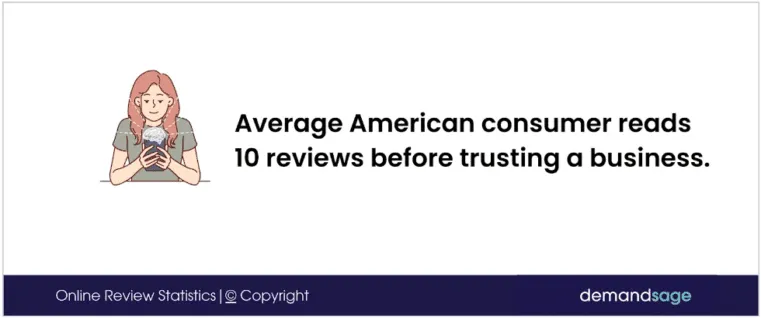
On average, people read about 10 reviews before they feel confident in a business.
This shows that trust builds step by step. A single positive review is not enough. Customers want to see:
- Consistent quality
- Repeated positive experiences
- Honest feedback over time
This also explains why a mix of reviews works better than perfection. If all reviews look too perfect, it may raise doubts.
For ORM strategy, focus on:
- Getting steady new reviews, not just a few
- Encouraging detailed feedback
- Responding to reviews to show activity
The goal is not just a high rating. The goal is believable trust.
3. 83% of Consumers Say Reviews Must Be Recent To Be Relevant
Fresh reviews matter more than old ones.
Many consumers believe that outdated reviews do not reflect the current state of a business. Around 83% of people say they avoid businesses involved in misleading or outdated review practices.
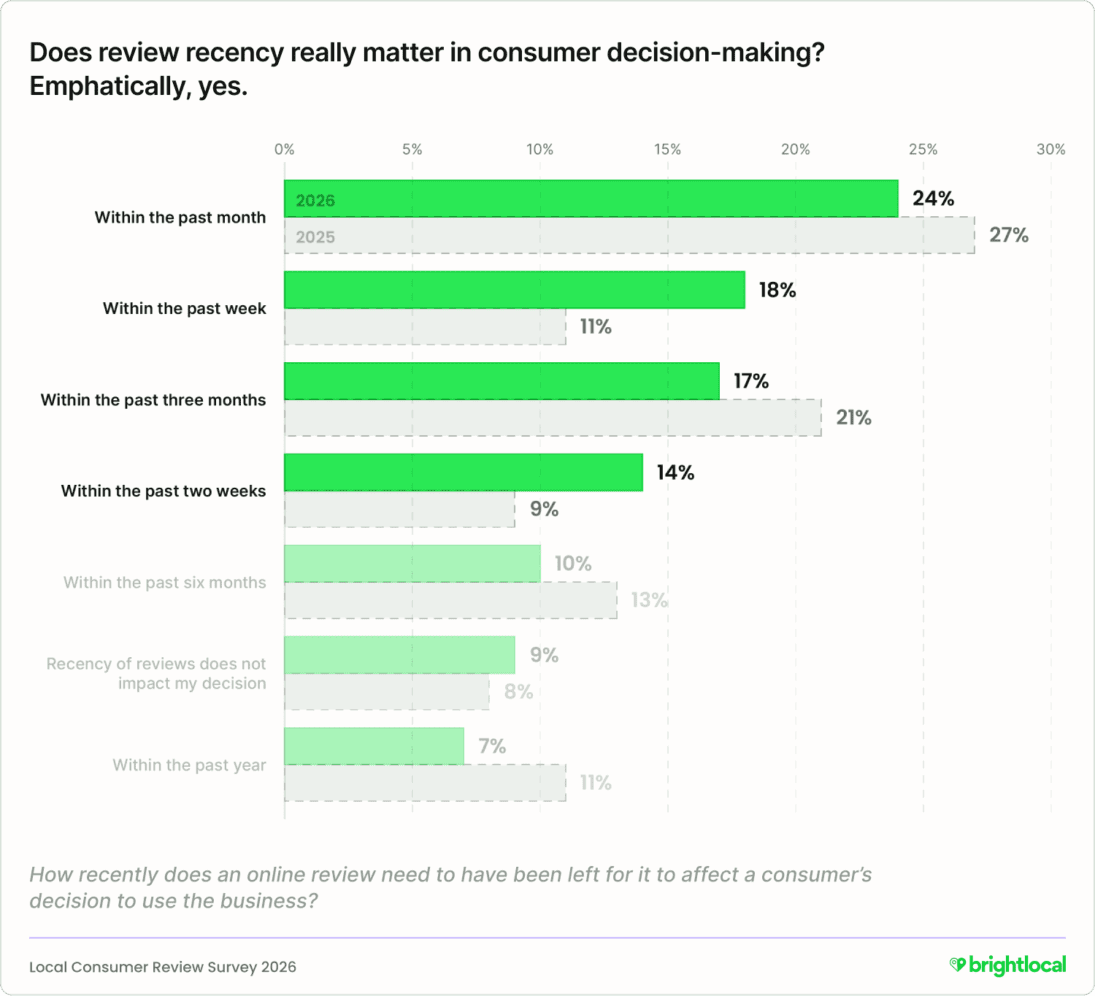
Customers want to know what your business is like today—not last year.
Old reviews create doubt:
- Has the service changed?
- Is the quality still the same?
- Is the business still active?
That is why recent reviews build confidence. They show that your business is active and consistent.
For ORM, this means you should:
- Collect reviews regularly
- Avoid long gaps without feedback
- Keep engaging with customers
A steady flow of new reviews signals reliability and builds stronger trust.
4. 60% of Consumers Trust Businesses With a Large Number of Reviews
Volume plays a big role in trust.
Many customers feel more confident when a business has a large number of reviews. Research shows that consumers expect businesses to have multiple reviews before trusting them.

A higher review count suggests:
- More real customer experiences
- Greater credibility
- Lower risk of fake or biased feedback
It also helps customers compare options. When one business has 200 reviews and another has 5, most people choose the one with more data.
For ORM strategy, this means:
- Focus on review quantity and quality
- Make it easy for customers to leave feedback
- Build reviews across multiple platforms
Trust grows when customers see both volume and consistency.
5. 58% of Consumers Are Willing To Pay More for Businesses With Positive Reviews
Online reviews do not just influence decisions—they directly affect how much people are willing to spend. Around 58% of consumers say they are ready to pay more for a business that has strong positive reviews.
This stat shows something very important for ORM:
Reviews are not just about trust. They are about pricing power.
When customers see consistent positive feedback, they feel safer choosing that business. They believe the experience will match the price. This reduces the fear of wasting money. As a result, price becomes less of a concern.
Positive reviews signal three key things:
- Reliable service or product quality
- Good customer experience
- Lower risk of disappointment
This is why businesses with strong ratings often outperform cheaper competitors. Even if the price is higher, customers prefer certainty over savings.
There is also a psychological factor at play. When many people share good experiences, it creates social proof. Customers think, “If others had a good experience, I probably will too.” That confidence makes them more willing to spend extra.
For ORM strategy, this insight is powerful. It means:
- Improving reviews can increase revenue without lowering prices
- Customer experience directly impacts profit margins
- Investing in reputation gives long-term returns
Better reviews do not just bring more customers—they bring higher-value customers.
6. 41.7% of Consumers Prefer Third-Party Review Sites When Researching Businesses
Trust depends on where reviews are found. Around 41.7% of consumers prefer third-party review platforms when researching businesses.

This shows that people do not fully trust reviews hosted on a brand’s own website. They often believe those reviews may be filtered or controlled.
Instead, they turn to independent platforms where reviews appear more transparent. These platforms feel more reliable because:
- Businesses have less control over feedback
- Both positive and negative reviews are visible
- Reviews come from a wider audience
Customers often check multiple sources before making a decision. In fact, many consumers use two or three different review platforms to confirm information.
This behavior highlights an important ORM lesson:
Your reputation is not owned by your website—it lives across the internet.
If your business only focuses on collecting reviews on your own platform, you miss where trust actually forms. Customers will still go elsewhere to verify your credibility.
For a strong ORM strategy, you should:
- Maintain a presence on trusted third-party platforms
- Monitor reviews across multiple sites
- Respond to feedback wherever it appears
The goal is consistency. Customers should see the same positive reputation no matter where they look.
7. 75% of Consumers Leave Reviews To Share Feedback and Help Businesses Improve
Many people think customers leave reviews only when they are unhappy. But the data shows a different story.
Around 75% of consumers leave reviews to share their experience and help businesses improve. This means reviews are not just complaints—they are communication.
Customers write reviews for several reasons:
- To share a good or bad experience
- To help other customers make decisions
- To give feedback directly to the business
Positive experiences often lead to reviews as well. In fact, many customers are more likely to leave feedback after a great experience than an average one.
This creates a valuable opportunity for businesses. Reviews become a free source of insights. They show what customers like, what they dislike, and what needs improvement.
Ignoring reviews means ignoring customer feedback at scale.
For ORM, this stat highlights a key shift:
Reviews are not just about reputation—they are about learning.
Businesses that actively read and respond to reviews can:
- Improve their services
- Fix recurring issues
- Strengthen customer relationships
Also, when customers see that a business responds to feedback, it builds trust. It shows that the business listens and cares.
Encouraging reviews is not enough. You must also act on them. That is where real value comes from.
8. 67% of Consumers Believe Fake Reviews Are a Serious Problem
Trust in online reviews is high—but it is also fragile. Around 67% of consumers believe fake reviews are a serious issue.
This concern is growing as more businesses compete online. Some try to boost ratings with fake positive reviews or damage competitors with fake negative ones.

Consumers are aware of this problem. As a result, they have become more careful when reading reviews. They look for signs of authenticity, such as:
- Detailed and specific feedback
- A mix of positive and negative reviews
- Consistent experiences across multiple users
If reviews look too perfect, they may raise suspicion.
This creates a challenge for businesses. Even honest companies can lose trust if their reviews do not look real.
For ORM strategy, authenticity is now critical. You should:
- Avoid fake or paid reviews at all costs
- Encourage genuine feedback from real customers
- Accept some negative reviews as part of transparency
Interestingly, having a few negative reviews can actually build trust. It shows that the feedback is real and not manipulated.
Consumers are not looking for perfection. They are looking for honesty.
9. AI Tools and Video Platforms Are Changing How Consumers Find Reviews
The way people consume reviews is evolving fast. Text-based reviews are no longer the only source of information.
Today, many consumers use AI tools, social platforms, and video content to explore opinions. They do not just read reviews—they watch, compare, and analyze them.

Video reviews are becoming especially popular. Around 29% of consumers say video reviews are the most effective way to understand a product or service.
This shift is happening for a few reasons:
- Videos feel more real and less scripted
- Customers can see the product or experience in action
- Facial expressions and tone add emotional context
At the same time, AI tools are changing how reviews are discovered. AI systems can:
- Summarize large numbers of reviews
- Highlight common pros and cons
- Help users make faster decisions
This means customers no longer need to read dozens of reviews manually. AI can do the work for them.
There is also a shift toward social proof on platforms like short-form video apps. People trust content from real users more than polished brand messages.
For ORM, this trend brings new challenges and opportunities:
- Businesses must monitor reviews beyond traditional platforms
- Visual and video feedback is becoming more important
- Reputation now spreads across multiple content formats
Your ORM strategy should not focus only on written reviews. It should include video content, social mentions, and AI-driven insights.
The future of reviews is not just text—it is multi-format and data-driven.
Wrapping It Up
Online reviews now control how people choose, trust, and spend. They are no longer just opinions—they are powerful decision tools.
From pricing influence to platform trust, each statistic shows a clear pattern. Customers want real, recent, and reliable feedback before making a choice. They compare sources, read multiple reviews, and look for consistency.
Positive reviews can increase revenue. A strong presence across platforms builds trust. Honest feedback improves both reputation and service quality.
At the same time, challenges like fake reviews and changing content formats make ORM more complex. Businesses must stay active, transparent, and adaptable.
The rise of AI and video content also means that reviews are no longer limited to text. Customers now expect richer, faster, and more authentic information.
In 2026, ORM is not just about managing reviews. It is about understanding customer behavior and building trust at every touchpoint.
Businesses that listen, respond, and improve based on feedback will stand out. Those that ignore reviews will fall behind.
Your reputation is your strongest asset—and reviews are the voice that shapes it.
Read More: How User-Generated Content Drives eCommerce Sales


